
‘Odyssea Americana’ art exhibit opens at The Soil Factory Sept. 4
Photography, drawing, maps, calligraphy, installations and audio recordings depict a trip by three scholar-artists in honor of Odysseus’ epic voyage, but in North America.
 Department Homepage
The College of Arts & Sciences
Department Homepage
The College of Arts & Sciences
Our faculty members are a multi-disciplinary group in the humanities who conduct research and teach on topics arranged under our rubrics of "Literature & Linguistics," "Religion," and "Society & Culture," as well as offering instruction in 14 modern Asian languages, and the department also offers instruction in five classical Asian languages (Sanskrit, Pali, Literary Chinese, Literary Japanese and Literary Vietnamese).
The department works with Asian specialists of all disciplines across campus, who collectively comprise the East, South and Southeast Asia area studies programs.
The Department of Asian Studies was initially organized in 1946 as the Department of Far Eastern Studies (changed to Asian Studies in 1962). It developed from a wartime program in the language, history, and culture of China that trained people for government service. The three Cornell Asian area programs for South Asia, Southeast Asia, and East Asia subsequently developed within the department before assuming their separate existences in the 1970s. Initially, the Department was located in Franklin Hall (renamed Tjaden Hall in 1980).
As more positions were assigned to the Department, and with the growth of graduate programs that provided universities around the world with prominent scholars of Asia, the problem of space became chronic. In the early 1970s the Department shifted to Rockefeller Hall where it now occupies the third floor.
Photography, drawing, maps, calligraphy, installations and audio recordings depict a trip by three scholar-artists in honor of Odysseus’ epic voyage, but in North America.

Projects spanned topics from Confederate cemeteries to Korean textiles.
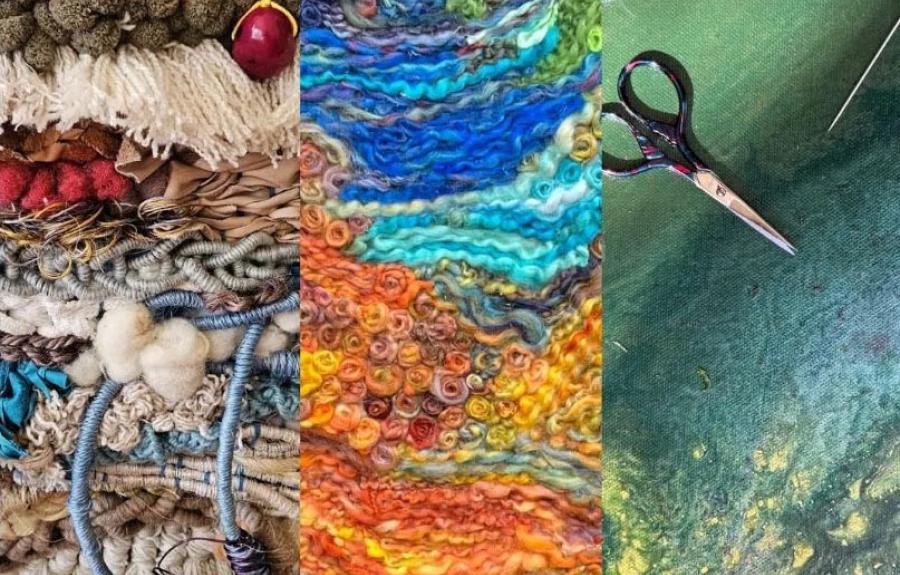
In times of uncertainty, art remains a powerful act of resilience. This May, Orozco Gallery will open its doors as a pop-up space for creativity, connection, and cultural celebration at 115 S Cayuga St, Downtown Ithaca. Featuring artist talks, live music, dance, and family-friendly events, the gallery invites people of all ages to come together…

Three short documentaries produced in a Rural Humanities Seminar, taught by PMA Associate Professor Austin Bunn, are headed to film festivals this fall.

Bitcoin mining consumes 2.3% of all U.S. electrical demand.

Coming from the University of Toronto, where he was the director of the Munk School of Global Affairs and Public Policy, Loewen began his five-year appointment as the Harold Tanner Dean of the College of Arts and Sciences Aug. 1.